New
- Accuracy
- 0.04 mm
- Volumetric accuracy
- 0.040 mm + 0.060 mm/m
Digital documentation of artifacts from the Saqqara necropolis with the 3DeVOK MT scanner: 0.04 mm accuracy, marker-free color scanning, microrelief analysis.
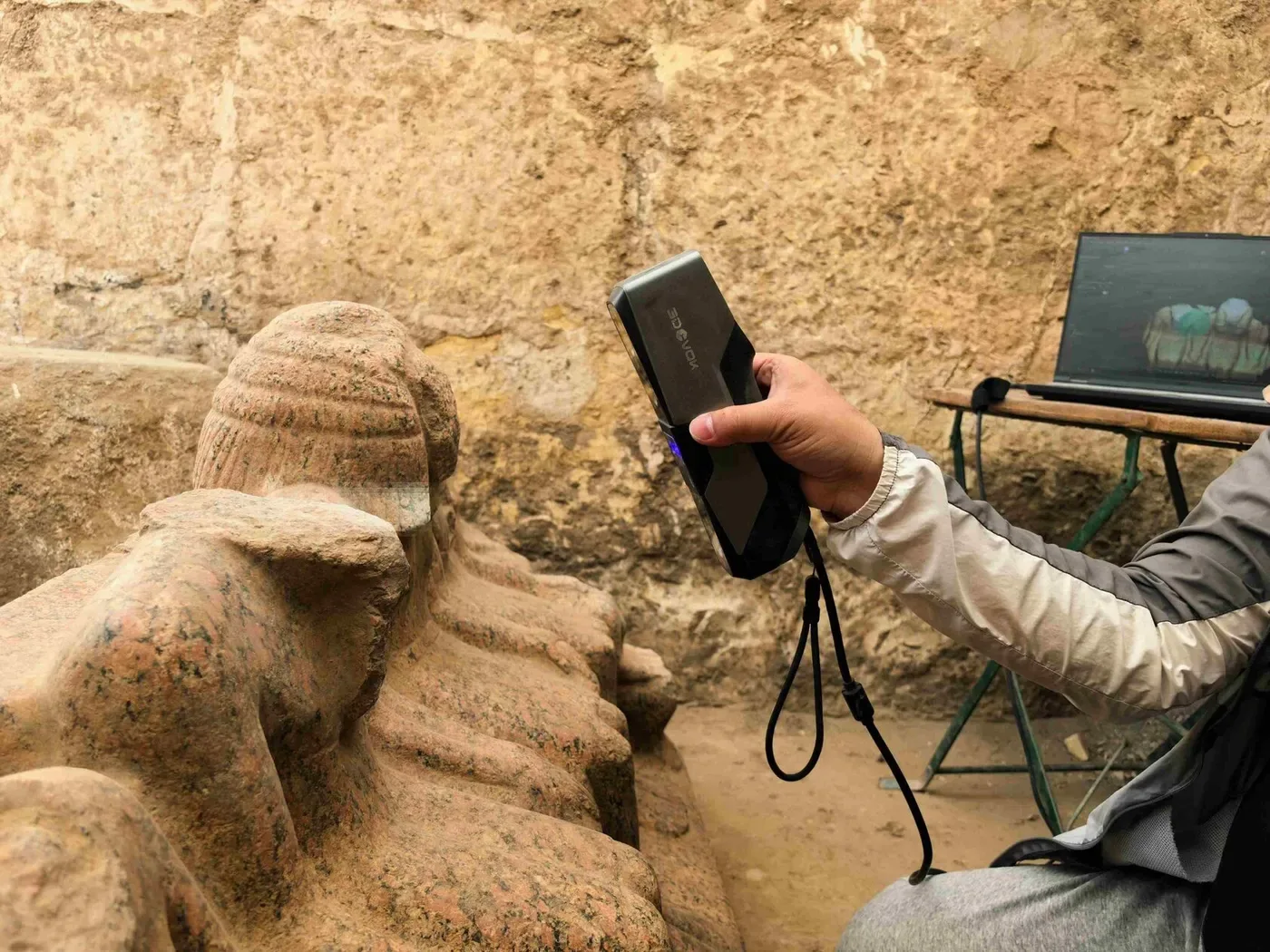
Industry: Cultural heritage Request: Scanning of archaeological objects Equipment: 3DeVOK MT 3D scanner
Beneath the golden sands of Saqqara, south of Cairo, lies a vast necropolis that once served ancient Memphis. This sacred burial ground holds the memory of the rise and fall of the pharaonic dynasties. In recent years, a series of sensational discoveries, including mummies, painted sarcophagi and finely crafted statues, has once again drawn the world's attention to this legendary site. In 2020, Saqqara was named one of the ten top archaeological discoveries in the world, reviving the interest of scholars and the general public alike.
Against this background, a Chinese-Egyptian project was launched to digitally study the artifacts found at Saqqara, marking a new stage of cooperation in cultural heritage preservation. The team carried out 3D scanning, photography, description and study of more than a thousand anthropoid wooden sarcophagi discovered at the site of the Temple of Bastet in North Saqqara. The specialists also assisted in the restoration of significant objects, including the statue of Ramesses II at the Karnak Temple. As a key technology partner, 3DeVOK took an active part in the digital preservation of the finds.
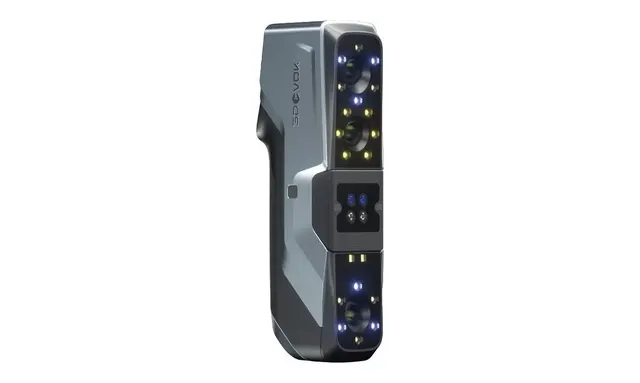
The portable 3DeVOK MT 3D scanner played a key role in documenting and capturing details directly on site. Equipped with a multi-light-source system, this scanner delivers accuracy of up to 0.04 mm and a resolution of 0.05 mm. This allows efficient non-contact scanning of fragile artifacts without the use of markers.
At two recently excavated sites, the 3DeVOK MT 3D scanner was used to create highly detailed digital copies of important monuments, including a false door of pink granite, a statue of black granite and several anthropoid wooden coffins. Thanks to a robust hybrid alignment system and a large scanning area, the MT worked successfully with a wide variety of materials, from porous wood to polished stone, in field conditions.
As part of the project, high-detail scanning and microrelief analysis were introduced into Egyptian field archaeology for the first time. This allowed researchers to capture not only the overall geometry of the objects but also microscopic features: layering of pigments, depth of carving and traces of wear. This gives a deeper understanding of the historical context and the craftsmanship of ancient artisans.
In addition, compared with traditional monochrome scanning, the color 3D scanning supported by the MT scanner not only reproduces the geometry of artifacts but also accurately conveys surface textures, colors and traces of erosion. All data is transferred in real time to dedicated 3D scanning software.
This creates a more complete and reliable digital basis for subsequent research and restoration work. When analyzing painted objects, matching fragments and reconstructing historical appearance, color 3D data significantly improves efficiency and accuracy.
Whether you are scanning stone sculptures or painted coffins, the MT eliminates the need for adhesive targets, avoiding the risk of damaging fragile artifact surfaces.
Ideal for capturing fine details on eroded carved figures, inscriptions and tool marks, which are critical for archaeological analysis.
Accurately reproduces the original pigments found on mummies, coffins and wall paintings, preserving their visual history in digital form.
The system does not use LEDs or external illumination, which makes it safer for light-sensitive materials such as ancient dyes, textiles and organic surfaces.
The 3D models created in this project are not just digital copies; they are valuable resources for:
Thus, scan by scan, 3DeVOK technology builds a bridge between the past and the future. It turns archaeology from a science of excavation into a science of digital preservation, where every artifact gains an eternal life in virtual space and opens a dialogue with the modern world.
3DeVOK, a sub-brand of SCANTECH (HANGZHOU) CO., LTD., specializes in 3D scanners outside of metrology. 3DeVOK offers powerful, affordable and easy-to-use 3D scanning solutions that deliver accuracy, creativity and efficiency across a wide range of applications, from reverse engineering and cultural heritage preservation to medical innovation.
Archives usually contain drawings and photos, but this is not always enough for restoration, especially if an object has been damaged by fire or other factors. So what can be done?
An EXAMETRA engineer will pick a solution and run a demonstration.
Full catalog